
Search for Life Beyond Earth: Europa, Enceladus & the Future of Space Exploration
Explore the cutting edge of space science as planetary scientist Thomas O’Sullivan reveals how icy moons like Europa and Enceladus could harbor life beneath their frozen surfaces. From NASA’s groundbreaking discoveries to the future of AI-driven space missions, this conversation dives into humanity’s quest to answer one of the biggest questions of all: are we alone in the universe? Susan Wise: Hi, and welcome to Stars Launch Pod: Space Technology and Research Sciences, brought to you by StarSciences.org, where we connect, collaborate, and accelerate. I'm your host, Susan Wise. Please welcome Thomas O'Sullivan, planetary scientist and computational chemist,

The Space Economy Explained: Careers, Growth & Innovation with Antonio Ragusa
Discover how the rapidly growing space economy is creating global opportunities beyond engineering—from business and entrepreneurship to innovation and leadership. Insights from Space Economy Institute founder Antonio Ragusa. Susan Wise: Welcome to Stars Launch Pod: Space Technology and Research Sciences, brought to you by StarSciences.org, where we connect, collaborate, and accelerate. I'm your host, Susan Wise, and it's an honor to have with us on the podcast Antonio Ragusa, Founding President of the Space Economy Institute. Antonio, welcome to the podcast. Antonio Ragusa: Thank you so much, Susan, for the invitation and the opportunity. I really appreciate it.
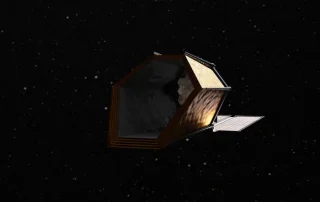
From a new flagship space telescope to lunar exploration, global cooperation – and competition – will make 2026 an exciting year for space
In 2026, astronauts will travel around the moon for the first time since the Apollo era, powerful new space telescopes will prepare to survey billions of galaxies, and multiple nations will launch missions aimed at finding habitable worlds, water on the moon and clues to how our solar system formed. Together, these launches will mark a turning point in how humanity studies the universe – and how nations cooperate and compete beyond Earth. Coming from one of the world's largest astrophysical research institutes, I can tell you, the anticipation across the global space science community is electric. Read Article
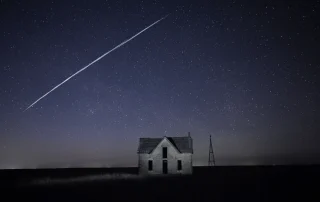
Study shows how earthquake monitors can track space junk through sonic booms
As more and more space junk comes crashing down, a new study shows how earthquake monitors can better track incoming objects by tuning into their sonic booms. Scientists reported Thursday that seismic readings from sonic booms that were generated when a discarded module from a Chinese crew capsule reentered over Southern California in 2024 allowed them to place the object’s path nearly 20 miles (30 kilometers) farther south than radar had predicted from orbit. Using this method to track uncontrolled objects plummeting at supersonic speeds, they said, could help recovery teams reach any surviving pieces more quickly — crucial if the debris is dangerous. Read Article
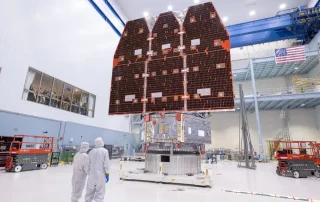
NASA’s powerful new Roman Space Telescope is complete — and will soon begin mission to find 100,000 alien worlds
NASA recently revealed the first pictures of its newly constructed Nancy Grace Roman Space Telescope, which could soon help researchers hunt for exoplanets, map the Milky Way and unravel some of the universe's biggest mysteries, such as the true nature of dark matter. Experts have also revealed the most probable launch date for the next-generation spacecraft, confirming that it will likely lift off ahead of schedule — and could begin collecting data before the end of 2026. Roman is NASA's next flagship space telescope, following on from the Hubble Space Telescope, which launched in 1990, and the James Webb Space Telescope (JWST), which launched in 2021. The orbital
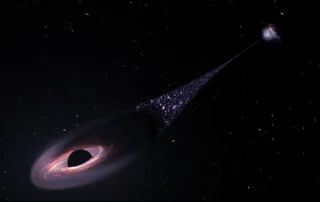
James Webb telescope confirms a supermassive black hole running away from its host galaxy at 2 million mph, researchers say
A shock wave, far away in space, might be the telltale sign of the first confirmed "runaway" supermassive black hole, escaping its host galaxy at 2.2 million miles per hour (3.6 million km/h). The potential confirmation by the James Webb Space Telescope (JWST), published on the preprint server Arxiv on Dec. 3, has not yet been peer-reviewed. But it has been submitted to Astrophysical Journal Letters and lead study author Pieter van Dokkum, a professor of astronomy and physics at Yale University, has published several peer-reviewed papers about candidate supermassive black holes in recent years. Van Dokkum says this is the first confirmation of a runaway supermassive