

From Orbit to Organics: How Dr. Malav Trivedi Is Translating NASA’s Zero-Gravity Science to Earth’s Skincare
Dr. Malav Trivedi, the founder of Zero Gravity Sciences, operates at the intersection of high-stakes space technology and human health. A pharmacist by training with a Master’s and Ph.D. in neuroscience, his academic foundation lies in epigenetics—the study of how daily environmental factors, such as diet, sleep, nutrition, and pollution, affect gene expression and bodily metabolism. His journey to becoming a pioneer in applied space biology began by studying how microgravity might affect stem cell development and formation. This research led him to a remarkable technology developed by NASA back in the 1960s and 1970s: microgravity bioreactors. This system,
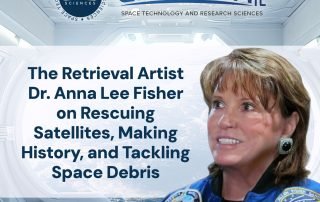
The Retrieval Artist: Anna Lee Fisher on Rescuing Satellites, Making History, and Tackling Space Debris
Anna Lee Fisher carries a unique legacy in the history of human spaceflight. Not only was she selected in the inaugural class of female astronauts for the Space Shuttle program, but in 1984, during Mission STS-51A, she became the first mother to fly in space. In a recent interview with Susan Wise on the STARSLaunchPod, Dr. Fisher, a retired NASA astronaut and celebrated icon, reflected on her pioneering journey, the high-stakes mission that defined her career, and her current efforts to ensure the sustainability of the orbital environment. The STS-51A: A Rescue Mission Against the Clock Dr. Fisher’s flight
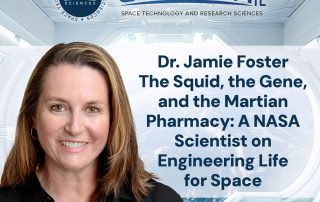
The Squid, the Gene, and the Martian Pharmacy: A NASA Scientist on Engineering Life for Space
Dr. Jamie Foster is working toward a multi-planet future, but her laboratory is far from the stark, sterile imagery of hard science fiction. As a professor at the University of Florida’s Department of Microbiology and Cell Sciences, Dr. Foster’s research is unique: her lab is situated at the Kennedy Space Center in a place called the Space Life Sciences Lab. Her team is focused on fundamental questions of survival: how do humans, animals, and the microbes they carry thrive in the punishing environment of space, and how do stresses like microgravity or radiation affect their health? “We’re definitely looking
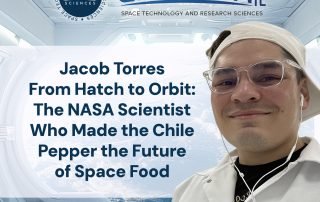
From Hatch to Orbit: The NASA Scientist Who Made the Chili Pepper the Future of Space Food
When Jacob Torres decided to pursue a master’s thesis at Purdue University, he was following a long tradition: studying in the Neil Armstrong building and finding inspiration in the legacy of NASA engineers and astronauts. But while his initial sights were set on high-tech engineering—like applying for roles on the Mars 2020 rover project, the Solar Parker probe, or 3D printing components for spacesuits—Torres's destiny lay elsewhere. A last-minute application for a role in "plant growth for food production in microgravity" led him to the Kennedy Space Center (KSC). “It said plant growth for food production in microgravity I

Beyond the Pickaxe: How Swarm Robotics and “Touchless Mining” Are Paving Humanity’s Way to Mars
The ambition to expand humanity beyond Earth's ecosystem and into the solar system requires a foundational economic engine. For Jim Keravala, the CEO and Chief Architect of Offworld, that engine is mining. Caravala notes that the first stage of industrialization, whether on Earth or extraterrestrially, is typically mining, followed by construction, manufacturing, and fabrication. Offworld's vision is built on this sequence, pioneering a revolutionary swarm robotic mining architecture. "The premise around Offworld is really born from our vision and passion about seeing humanity expand beyond Earth's ecosystem into the solar system," Caravala explains. The Robot Puppies and 24/7 Mining
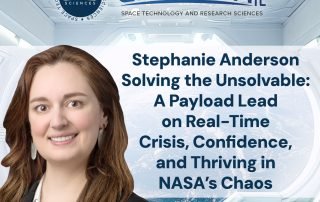
Solving the Unsolvable: A Payload Lead on Real-Time Crisis, Confidence, and Thriving in NASA’s Chaos
For Stephanie Anderson, the work happens in the urgent, high-stakes environment of Mission Control. As the Payload Operations Lead, Anderson has spent over 10 years on the International Space Station (ISS) program, commanding the team responsible for ensuring the successful execution of science experiments and research facilities orbiting 250 miles above Earth. Her job is centered on supporting NASA-sponsored payload facilities on board the space station, meaning she and her team must guarantee these facilities function properly. When malfunctions or unexpected issues arise, they are the rapid-response team, helping diagnose the problem and get it fixed quickly so that